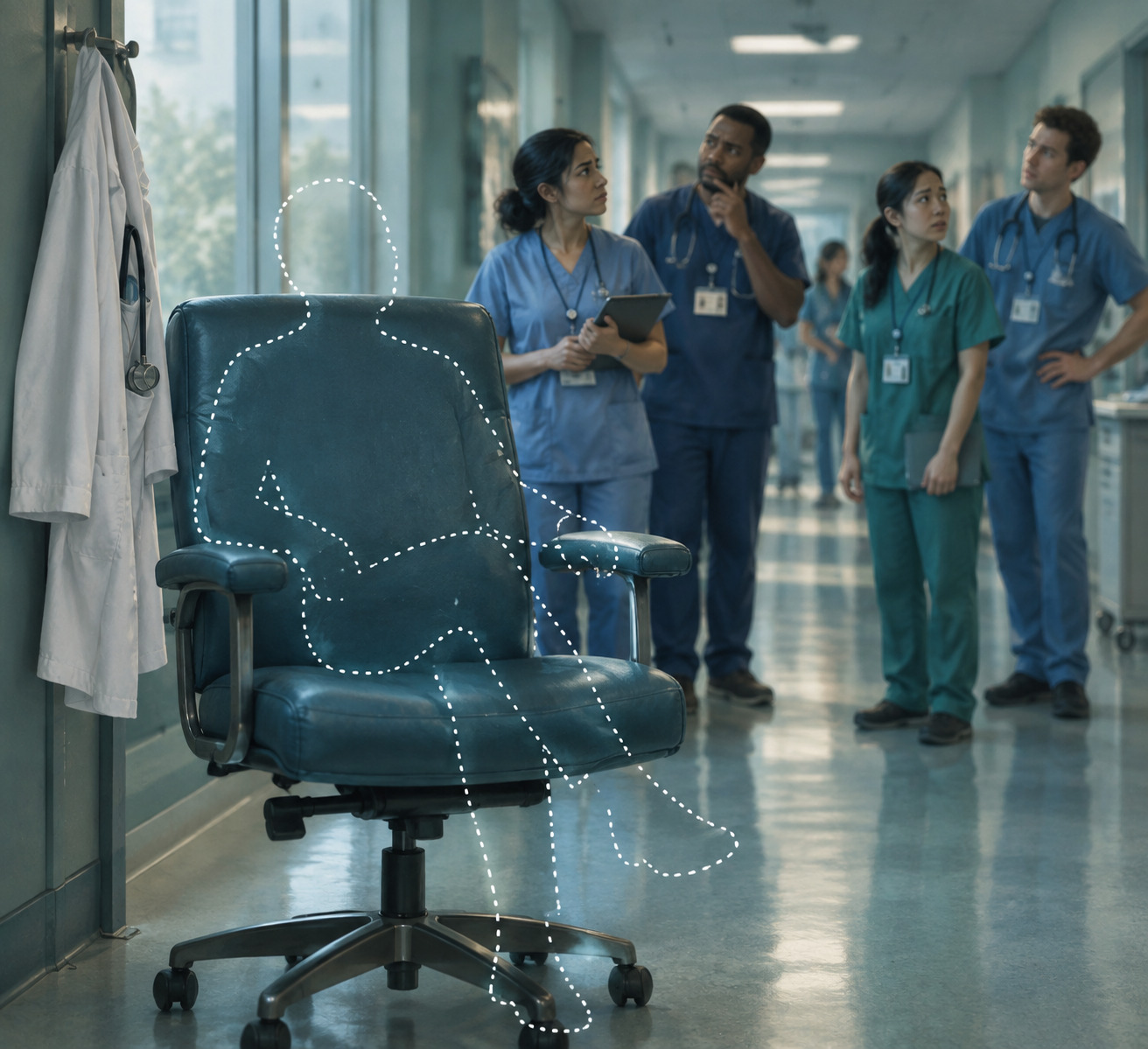
Clinical practice often waxes lyrical about positive role models, affirmative traits, and thoughtful reflection. Almost everyone has everyone that they look up to – be it a particularly inspiring senior member of staff, or indeed outside of work. (Perish the thought that we should have social lives…)
The reverse is also true.
There are those people you periodically meet who have absolutely no business being a role model. They have no business being a senior member of staff. And yet, due to the way the NHS is – putting your head above the parapet often ends in disaster.
Clinical events – positive or negative – shaped me as a clinician.
I remember the good, such as when I revised a terminal diagnosis of cancer as an SHO in a patient with presumed RCC, yet years down the line had no evidence of mets to the lungs on CXR.
I remember the bad, such as when I had to tell a young patient who was gearing up for curative surgery that instead it had spread and was now incurable.
The same applies to interactions. I model myself upon senior members of staff who have traits I feel exemplify what a senior clinician should be. Approachable, able to have a laugh but when the chips are down and seconds count that they know what to do.
The reverse is true.
Years ago as an SHO I had an asthmatic patient with a raised lactate. I did not reflexively give fluids, and went to ask a particularly notorious consultant among the SHO body to confirm I was correct in ascribing this to their judicious salbutamol usage. Instead, I got a public dressing down and was humiliated, and the new consultant asked to review the patient.
I know now, with experience, that I was correct. I know now, that their behaviour was unacceptable. I carry that with me as a core memory of how more junior members of staff can easily be degraded due to the power imbalance. No matter how much we harp on about “flattening the hierarchy” – there is always a hierarchy. Flattened – not flat.
The same revolting thread goes to the senior registrar who was meant to be the SHO voice to the consultants. Despite many of us stating this consultant’s behaviour was abhorrent, this liaison instead told me that said consultant was normally a pleasant person and it’s just the pressure of the job.
Likewise, when a radiographer felt they could speak to me about their issues at work, instead of anyone focusing upon the positives of being a supportive colleagues that people felt they could speak to, I was instead chastised for not being senior enough to have that discussion and I should have kept to being on the shop floor. I didn't know it then, but I recognise now that I was being gaslit.
I remember such events more clearly than I do any algorithm. They crystalise everything that I must never be. By recalling and immortalising such events do I go forwards, and build myself into something greater.
To these individuals, I say thank you.
Thank you for demonstrating to me and showing me the path not to tread. Thank you for giving me the harrowing experience of humiliation, hopelessness and self-doubt so that I understand how to overcome them. Thank you for building me into what I am today, and what I will be tomorrow.
But most of all, from the bottom of my heart: